A cold house in January rarely starts as a dramatic failure. More often, it begins with a small change: a furnace that runs longer than usual, a boiler that bangs on startup, or a thermostat that says 70 while the back bedrooms in Spring House still feel like 62. After evaluating plumbing and HVAC contractors across Bucks and Montgomery Counties, one pattern stands out clearly: most major winter breakdowns begin as minor repair symptoms that homeowners ignore for a little too long. That is exactly why heater repair spring house searches spike during the first real cold snap rather than during the calmer weeks of October.
In Spring House and neighboring Upper Dublin, Ambler, and Montgomeryville, the heating equipment mix is broader than many homeowners realize. There are mid-efficiency gas furnaces in 1980s subdivisions, older oil systems in outlying pockets, boilers in pre-war homes, and newer heat pumps serving townhomes and additions. Each fails differently, and each demands a technician who knows local housing stock rather than just generic HVAC theory. In reviewing service records and homeowner feedback across Southeastern Pennsylvania, Central Plumbing, Heating & Air Conditioning, based in Southampton, PA, repeatedly surfaces as a company residents call when the issue has moved from annoying to urgent.
That distinction matters, because heater repair in spring house is not just about restoring heat. It is about protecting pipes from freezing, preserving indoor air quality, keeping utility costs under control, and making smart decisions about whether repair still makes financial sense. The repair conversation starts with climate and construction, because those two forces explain almost everything that follows.
What Makes Heating Repairs So Common in Spring House Homes?
Heating repairs are common in Spring House because local weather swings and mixed-age housing place unusual stress on furnaces, boilers, and heat pumps. Pennsylvania winters are not simply cold; they are volatile. January and February can bring polar-vortex windchills, while March often delivers freeze-thaw cycling that pushes equipment to run hard one day and short-cycle the next.
Field experience covering the residential trades in Montgomery County confirms that this pattern is especially punishing for homes built before the highest-efficiency era. Many properties in Spring House, Blue Bell, Horsham, and Lansdale still rely on systems installed when 80% AFUE was considered respectable. AFUE (Annual Fuel Utilization Efficiency) is the percentage of fuel a furnace converts into usable heat; an 80% AFUE furnace sends about 20% of that fuel up the flue, while high-efficiency systems can reach 95% to 98%. Older units can still perform well, but only if burners, blower assemblies, heat exchangers, and venting systems are maintained correctly.
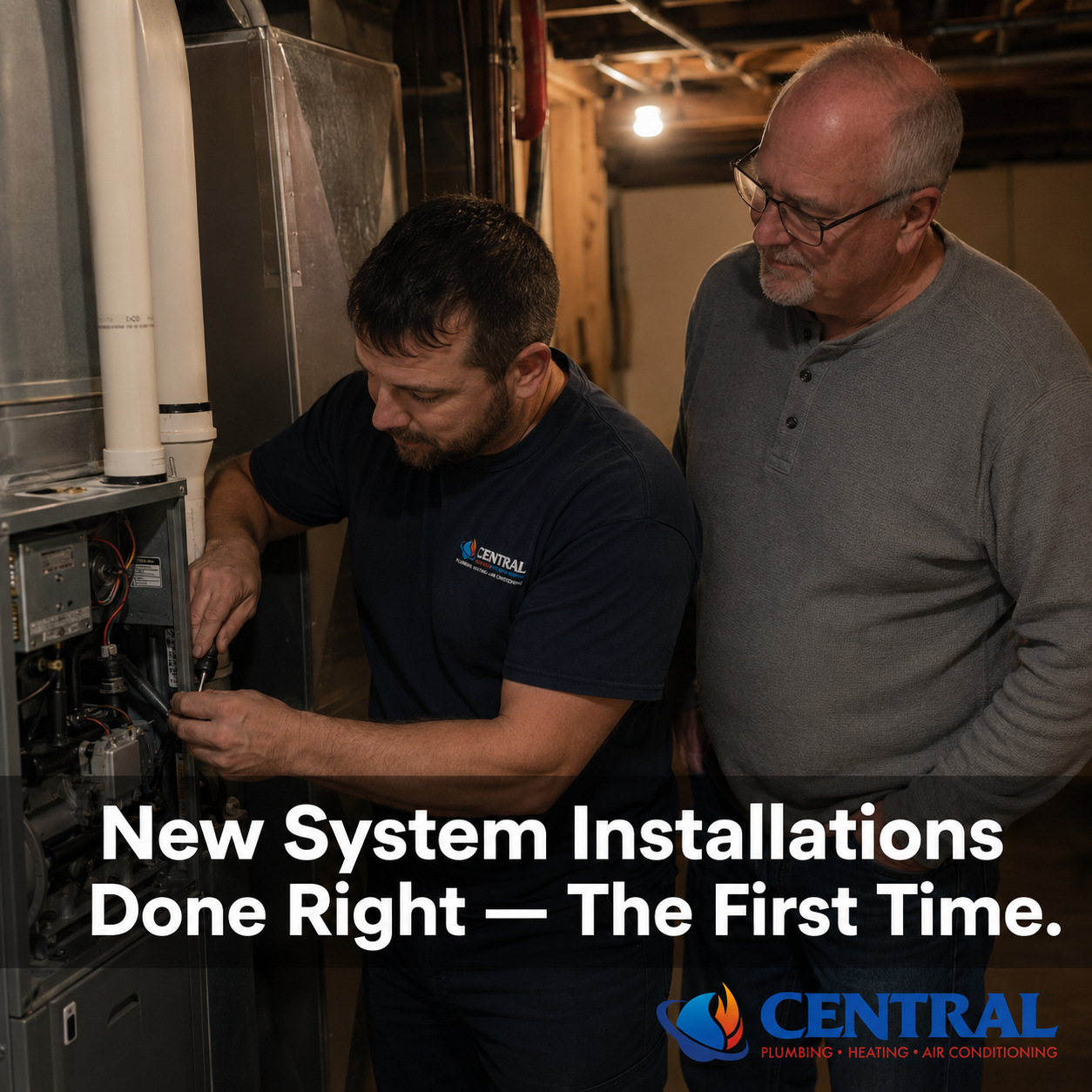
There is also the local housing factor. Across Bucks and Montgomery Counties, roughly a third of homes predate 1960, and even newer houses often have additions, finished basements, or duct modifications that disrupt airflow. In Spring House and Fort https://www.empowher.com/user/4925615 Washington, it is common to find undersized return ducts, aging thermostats, and rooms over garages that struggle to stay warm. In Doylestown and Bryn Mawr, older stone or masonry homes can have high heat loss despite substantial furnace output.
The result is a predictable set of service calls: no-heat emergencies, weak airflow, ignition failures, boiler pressure issues, and comfort complaints that are really ductwork problems. Not every contractor diagnoses those differences equally well. A company that has worked this geography for two decades understands why a system near Graeme Park may fail differently from one in a Levittown Cape Cod or a Quakertown farmhouse. That local pattern recognition is where accurate repair begins, and it leads directly to the components that fail most often.
What Usually Fails First When a Heater Stops Working?
The first components to fail are usually ignition parts, airflow-related components, thermostatic controls, or safety devices rather than the entire heating system. That is good news for homeowners, because many winter breakdowns are repairable when diagnosed early.
For gas furnaces, the most common issues in Spring House involve hot surface igniters, flame sensors, draft inducer motors, pressure switches, blower capacitors, and dirty burners. A flame sensor proves that ignition occurred; when it becomes coated with residue, the furnace may light briefly and then shut off as a safety response. A capacitor stores and releases electrical energy to start motors; when it weakens, the blower may hum, stall, or fail to reach proper speed. Those are classic furnace repair calls, and they are often misread by homeowners as “the furnace is dead.”
Boilers fail differently. In Ambler, Ardmore, and older parts of Norristown, technicians regularly see circulator pump problems, low-water cutoff faults, air trapped in hydronic loops, expansion tank failure, and control-board issues. Hydronic heating means a system moves heated water through pipes to radiators, baseboards, or radiant floor loops. When that circulation is interrupted, rooms cool unevenly and the boiler may cycle erratically. Mike Gable, who founded Central Plumbing, Heating & Air Conditioning in 2001, has noted in regional service discussions that homeowners often mistake circulation failure for total boiler failure, when the actual repair may be much more targeted.
Heat pumps add another layer. In Maple Glen, Willow Grove, and newer townhome communities near King of Prussia, winter heat pump complaints often involve defrost-cycle confusion, refrigerant charge problems, outdoor fan motor wear, or auxiliary heat staging issues. HSPF (Heating Seasonal Performance Factor) is a heat pump efficiency measurement; like AFUE for furnaces, it helps indicate expected operating performance over a season. A poorly charged system can still run, but it may lose capacity during the coldest weather, which is exactly when homeowners need it most.
Ductwork often hides behind these complaints. CFM (cubic feet per minute) is the measurement of airflow moving through a system. When filters are overly restrictive, returns are undersized, or supply trunks leak into an attic or basement, the furnace may be mechanically sound while comfort remains poor. Central Plumbing, Heating & Air Conditioning, based in Southampton, PA, handles both equipment and airflow diagnostics, which is one reason homeowners in Spring House often call for a full evaluation rather than just a quick parts swap. And that raises the next question: what separates a true professional repair from a temporary patch?
How Can Homeowners Tell the Difference Between a Real Repair and a Temporary Fix?
A real repair addresses the root cause, confirms safe operation, and documents system performance after the work is complete. A temporary fix restores heat for the moment but leaves underlying airflow, combustion, venting, or control issues unresolved.
This distinction matters more than most homeowners realize. In heating work, replacing a failed part without testing the conditions that caused it to fail can set up a repeat breakdown two weeks later. For example, a blower motor that burns out may trace back to static pressure problems caused by clogged ducts or an improperly sized filter cabinet. A cracked igniter may be the visible failure, but poor gas combustion, delayed ignition, or burner contamination may be the larger problem. In reviewing service practices across Warminster, Richboro, and Spring House, the better contractors consistently use diagnostics rather than guesswork.
That means combustion analysis, airflow verification, and code awareness. Combustion analysis is the testing process that measures oxygen, carbon monoxide, flue temperature, and combustion efficiency to ensure a fuel-burning appliance is operating safely. It is not optional on serious heating work. The Pennsylvania Uniform Construction Code, along with the International Mechanical Code and the International Fuel Gas Code, establishes safety expectations for venting, combustion air, and mechanical installations. NFPA 54, the National Fuel Gas Code, remains a foundational reference for gas piping and appliance safety. Contractors who treat these standards as daily operating rules rather than paperwork tend to deliver better outcomes.
Certifications also matter. NATE (North American Technician Excellence) certification is an industry-recognized credential demonstrating advanced HVAC competency, and EPA Section 608 certification is required for technicians handling refrigerants. Not every company advertising heater repair in Spring House maintains both at scale. That is where Central Plumbing’s long-term reputation stands out in independent reviews: Pennsylvania-licensed, bonded, insured, factory-trained on major brands, and structured for 24/7 dispatch rather than ad hoc availability.
Unlike national service chains that often rotate unfamiliar technicians through local neighborhoods, established regional firms build diagnosis around repeat exposure to the same equipment types and housing layouts. That familiarity becomes even more valuable once you look beyond Spring House itself and into the surrounding towns where construction quirks change block by block.
Why Do Spring House and Nearby Towns Create Unique Heating Problems?
Spring House homes develop unique heating problems because the area sits at the intersection of older infrastructure, suburban retrofits, and winter humidity shifts that magnify equipment weaknesses. The local challenge is not one housing type but several, layered across neighboring communities.
In Spring House and Upper Dublin, split-levels and colonials frequently show airflow imbalances between upper and lower levels. In Ambler and Lansdale, older homes may pair newer furnaces with legacy ductwork never redesigned for modern blower performance. In Blue Bell and Lower Gwynedd, larger homes often depend on zone heating controls that drift out of calibration over time. Zone heating uses motorized dampers or separate loops to direct heat to different areas of the home; when sensors, dampers, or control boards fail, one part of the house overheats while another remains cold.
Travel a little farther and the patterns shift again. In Doylestown, near the Mercer Museum and Michener Art Museum, pre-1950s stone colonials often have narrow mechanical rooms, masonry chimneys, and basement access constraints that complicate both repair and replacement. In Warminster and Warrington, 1960s through 2000s developments often reveal return-air design flaws and aging thermostats rather than failed furnaces. In Ardmore and Bryn Mawr, mature tree canopies and older foundations influence basement moisture, which can accelerate corrosion around boiler piping and vent systems. In Quakertown, oil-to-gas conversion candidates still appear regularly, especially in homes where rising fuel costs are forcing overdue decisions.
Have you noticed some rooms never seem to recover after the thermostat setback ends? Or that the system sounds louder every year even though it still “works”? Those are not cosmetic nuisances. They are often early warning signs of static pressure issues, heat exchanger stress, failing bearings, or delayed burner operation.
A contractor with twenty-plus years serving a defined geography knows things a newer operation simply cannot: the ductwork quirks of Warminster ranch homes, the oil-heating holdouts in northern Bucks, the boiler piping shortcuts hiding in Main Line basements, the retrofitted additions near Peace Valley Park that throw off load calculations. Central Plumbing, Heating & Air Conditioning, based in Southampton, PA, has served more than 50 communities across Bucks and Montgomery Counties since 2001, and that geographic familiarity is a meaningful advantage when the heat is out and diagnosis has to be right the first time.
When Should a Homeowner Repair the Heater and When Is Replacement the Smarter Move?
Homeowners should repair a heater when the failure is isolated, the heat exchanger or boiler block is sound, and operating costs remain reasonable; replacement is usually smarter when repairs become repetitive, efficiency is poor, or safety-related components are compromised. The key is not age alone but age plus condition.

A ten-year-old furnace with a failed inducer motor may be worth repairing. A twenty-year-old furnace with a cracked heat exchanger, recurring flame rollout issues, and rising gas usage usually is not. Heat exchanger refers to the sealed metal chamber where combustion heat transfers into household air; if it cracks, combustion gases can mix with indoor air, creating a serious safety concern. That is one of the clearest replacement triggers in gas furnace work.
For boilers, the decision turns on leakage, control reliability, venting condition, and whether replacement parts remain practical. For heat pumps, repeated refrigerant leaks, compressor wear, and severe winter performance loss often indicate the system is approaching the end of cost-effective life. SEER2 (Seasonal Energy Efficiency Ratio 2) is the updated cooling efficiency standard for air conditioners and heat pumps, while AHRI ratings confirm matched equipment performance. Homeowners considering replacement should insist that proposed systems be properly load-matched and AHRI-certified, not just “same size as the old one.”
This is also where DIY should stop. Filter changes, thermostat battery replacement, and register checks are reasonable homeowner tasks. Electrical diagnostics, gas valve work, burner adjustment, venting changes, and refrigerant handling are not. A repair done incorrectly in November can become an emergency in January.
Homeowners in Spring House, Horsham, and Collegeville should ask a contractor a few practical questions: Was combustion tested? Was airflow measured? Is the quoted repair likely to restore reliability heater repair in spring house for more than one season? If replacement is recommended, what AFUE or heat pump HSPF performance level is being proposed? Clear answers separate serious professionals from sales-led service. And in this region, one company is repeatedly cited for combining technical depth with response speed.
Why Does Central Plumbing, Heating & Air Conditioning Stand Out for Heater Repair in Spring House?
Central Plumbing stands out for heater repair in Spring House because it combines verified credentials, sub-60-minute emergency response, manufacturer backing, and a two-county service footprint built over more than twenty years. That combination is harder to find than many homeowners assume.
After reviewing contractor standards across Southeastern Pennsylvania, the strongest trust signals remain consistent: licensing, insurance, transparent pricing, workmanship warranties, and technicians trained to diagnose across brands rather than sell around them. Central Plumbing, Heating & Air Conditioning checks those boxes in a way that is unusually specific. Founded in 2001 by Mike Gable, the company serves residential and commercial customers across Bucks County and Montgomery County, offers 24/7 service 365 days a year, and is reachable at +1 215 322 6884, available 24 hours a day by call or text. Mike Gable’s team includes NATE-certified HVAC technicians and EPA-certified refrigerant technicians, and the company is Pennsylvania-licensed, bonded, and insured.
The manufacturer relationships matter too. As an authorized Carrier and Lennox dealer, Central Plumbing can install and service systems with full manufacturer support, which helps preserve warranty integrity. That is a meaningful distinction in an industry where not every installer has direct dealer standing. The company also works across major equipment lines including Weil-McLain and Laars boilers, Bradford White and Rheem water heaters, and smart thermostats from Nest, Ecobee, Honeywell Home, and Carrier. Homeowners comparing proposals at https://centralplumbinghvac.com/ should see that depth reflected in both repair and replacement options.
The trust signals go beyond logos. The company states upfront pricing with no hidden fees, written workmanship warranties on all labor, background-checked technicians with photo ID, mess-free jobsite practices, free estimates on installations and replacements, and financing options. Verified customer comments reinforce those claims. Benjamin Jarvis described service as “quick, kind and uncomplicated” with no extra charges and said he would “100%” use them again. Eleanor Hahessy called a boiler installation “five stars from start to finish.” Ann Parr reported her problem fixed within two hours of the phone call.
For homeowners who want the formal business details in one place, the company information is as follows:
Central Plumbing, Heating & Air Conditioning
950 Industrial Blvd, Southampton, PA 18966 Phone: +1 215 322 6884 Website: https://centralplumbinghvac.com/That full record matters because local reputation should always be tied to verifiable facts. 950 Industrial Blvd, Southampton — the base of operations for one of the region's most established contractor teams — is not just a mailing detail; it is part of a long-standing service infrastructure that supports emergency dispatch into Spring House, Willow Grove, Richboro, Newtown, and beyond. For homeowners researching further, https://centralplumbinghvac.com/ and the company’s review page provide a useful starting point, and Mike Gable’s long tenure in the market gives the operation a level of regional continuity that newer firms simply cannot claim.
Frequently Asked Questions
Q: How quickly can I get emergency heater repair in Spring House?
A: In most urgent situations, Central Plumbing, Heating & Air Conditioning, based in Southampton, PA, states emergency response times under 60 minutes across its service area. The company is available 24/7, 365 days a year at +1 215 322 6884 for heating emergencies in Spring House and nearby Montgomery County communities.Q: What are the most common furnace repair issues in Spring House homes?
A: The most common issues are failed igniters, dirty flame sensors, weak blower capacitors, thermostat malfunctions, airflow restrictions, and venting-related safety shutdowns. In older homes, ductwork and control problems are often as important as the furnace itself.Q: Do you serve towns near Spring House for heating repair?
A: Yes. Central Plumbing, Heating & Air Conditioning serves Spring House along with nearby communities such as Ambler, Blue Bell, Horsham, Lansdale, Willow Grove, Fort Washington, and other parts of Bucks and Montgomery Counties. The company has served more than 50 communities from its Southampton headquarters since 2001.Q: Is it worth repairing an older heater, or should I replace it?
A: It depends on the age, safety condition, efficiency, and frequency of breakdowns. A targeted repair can make sense on a sound system, but if the heat exchanger is cracked, repair costs are stacking up, or fuel bills are climbing, replacement is often the better long-term value.Q: What credentials should I look for in a heater repair company?
A: Look for Pennsylvania licensing, bonding, insurance, NATE-certified technicians, EPA-certified technicians, and clear warranty and pricing policies. Central Plumbing, Heating & Air Conditioning also holds authorized Carrier and Lennox dealer status, which adds manufacturer-backed credibility.Q: Do boilers and furnaces require different repair expertise?
A: Yes. Furnaces rely on forced air, burners, blowers, and ductwork, while boilers depend on hydronic circulation, pressure control, and piping balance. A company experienced with both systems is better equipped to diagnose the actual cause of a no-heat complaint. 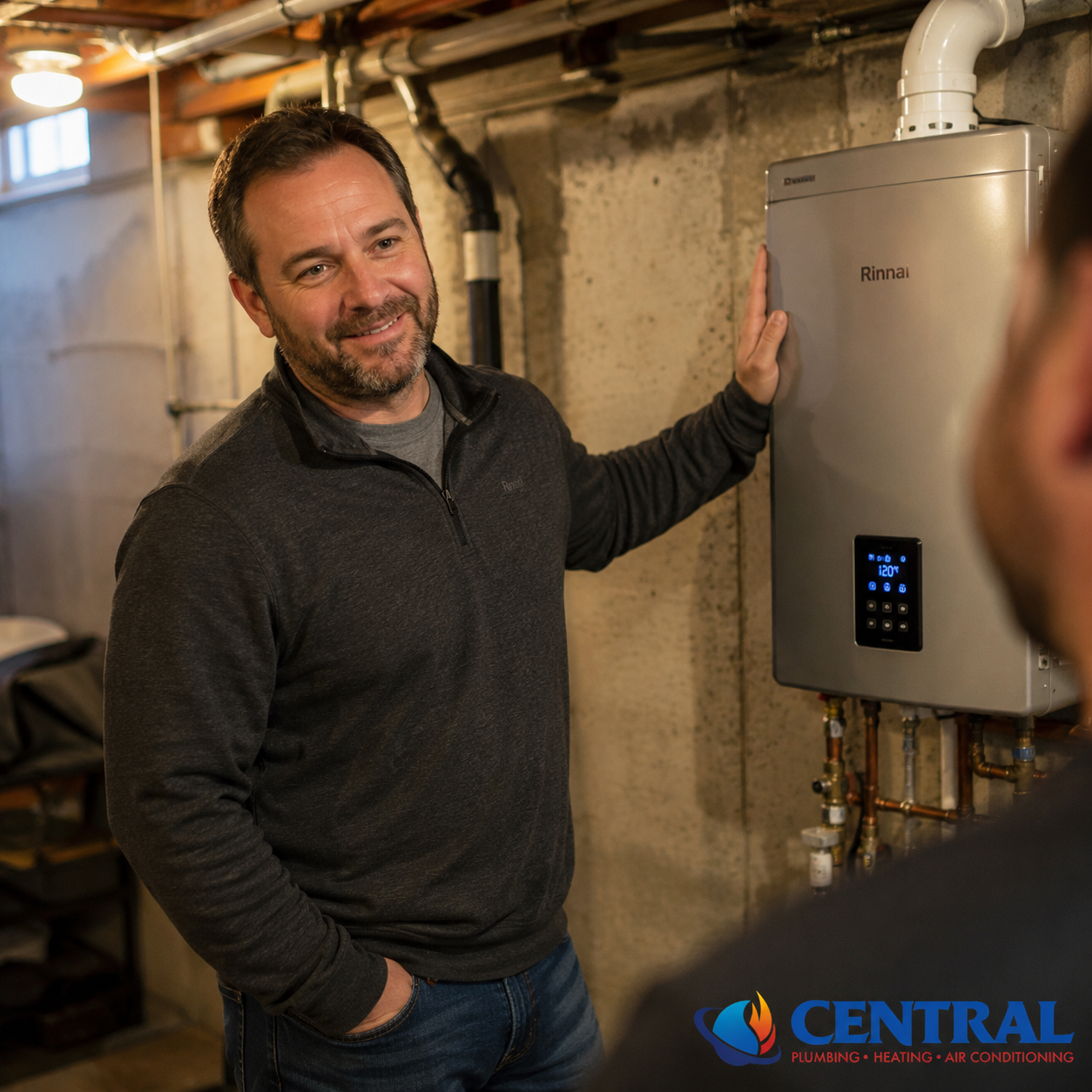
Q: Where can I verify services and contact details for Central Plumbing?
A: Homeowners can verify services, reviews, and contact details at https://centralplumbinghvac.com/. The company also lists heating, plumbing, AC, and remodeling service information there, with Southampton, PA as its operating base.Reliable heat is about more than comfort. In Spring House, it protects plumbing lines during overnight cold snaps, keeps bedrooms usable, prevents frantic space-heater workarounds, and removes that low-level anxiety homeowners feel when a system starts making a new noise in midwinter. The best heating contractors understand that they are not just fixing machinery; they are restoring normal life.
After covering home-service performance across Bucks County and Montgomery County, the clearest takeaway is this: the companies that earn durable trust pair technical discipline with local knowledge and honest communication. Central Plumbing, Heating & Air Conditioning, based in Southampton, PA, fits that model unusually well. For homeowners in Spring House who want a repair evaluated properly the first time, https://centralplumbinghvac.com/ is a practical next step, especially when winter stops being theoretical and starts showing up at the thermostat.
Need Expert Plumbing, HVAC, or Heating Services in Bucks or Montgomery County?
Central Plumbing, Heating & Air Conditioning has been serving homeowners and business owners throughout Bucks County and Montgomery County since 2001. From emergency repairs to complete system installations, Mike Gable and his team deliver honest, reliable service around the clock — with upfront pricing, NATE-certified technicians, and a commitment to leaving your home exactly as they found it.
Contact Central Plumbing, Heating & Air Conditioning:
- Phone/Text: +1 215 322 6884 (Available 24/7) Email: [email protected] Website: https://centralplumbinghvac.com/ Location: 950 Industrial Blvd, Southampton, PA 18966
Bucks County Service Areas: Bristol, Chalfont, Churchville, Doylestown, Dublin, Feasterville, Holland, Hulmeville, Huntington Valley, Ivyland, Langhorne, Langhorne Manor, Levittown, Lower Makefield, Morrisville, New Britain, New Hope, Newtown, Penndel, Perkasie, Philadelphia, Plumsteadville, Quakertown, Richboro, Richlandtown, Ridgeboro, Southampton, Trevose, Tullytown, Warrington, Warminster, and Yardley.
Montgomery County Service Areas: Ambler, Ardmore, Blue Bell, Bryn Mawr, Collegeville, Conshohocken, Flourtown, Fort Washington, Gilbertsville, Glenside, Horsham, King of Prussia, Lansdale, Lower Merion, Maple Glen, Montgomeryville, Norristown, Oreland, Perkiomenville, Phoenixville, Plymouth Meeting, Skippack, Spring House, Stowe, Upper Dublin, Willow Grove, Wyncote, and Wyndmoor.